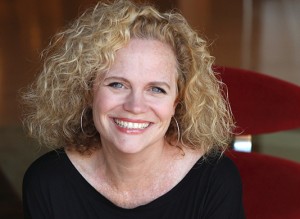

Cindy and Dan Barben. Photo courtesy of Cindy Barben
BY DEB AND TIM SMITH
We will begin this article by sharing Cindy Barben’s heartfelt desire to say, “Thank you to our community; we couldn’t have done this without you and the people who are mentioned in this article.”
The Empire State has a distinguished agricultural heritage that can be traced to the earliest days of our history as a leader among states. Throughout the centuries, farming has been one of New York’s most profitable industries and remains a chief component of our economy. One local Mendon family that has certainly contributed to this agricultural tradition is the Barbens, with Dan and Cindy being the current family members operating the farm.
The Barbens have a 120-year history in town and here’s their story…
Having recently emigrated from Spiez, Switzerland, Dan’s Grandfather Gottlieb Barben purchased the 80-acre farming homestead of the McHuron/Horton Estate in 1906. This parcel is situated on the southwest corner of Rush Mendon and West Bloomfield’s Roads. Gottlieb was one of six children, three of whom had come to America.
The crop production was diverse, including farm raised crops of cabbage, wheat, corn, oats, hay, straw, hops, buckwheat, root vegetables/turnips, and kidney beans. Animals raised on the farm included beef cattle, cows, pigs, chickens and horses.
Upon Gottlieb’s death, the farm was inherited by his wife, Amelia. In 1945, the farm was willed to Amelia’s children and her son, Fredrick “Fred”, purchased the farm from his siblings. To properly connect the familial dots on this, we must rewind a few years at this point.
Fred met his future wife Dorothy at a band concert in Fishers in 1939. Dorothy’s childhood was spent growing up in the hamlet of Mendon Center which was located at the intersection of Rush Mendon and Mendon Center Roads. She was the third youngest of nine children, born over a span of 21 years to Fred and Effie Gaebel. Five years after their first meeting, Fred and Dorothy were married in 1944, thus establishing the second generation of Barben farmers.
Fred died in 1992, leaving the farm to his wife, Dorothy, and when Dorothy passed away in 2002, her son, Daniel, assumed ownership of the farm. So that brings us up to the current generation of Dan and Cindy who were married in 2003 and have now operated the farm for 22 years. These are the fine folks that will greet you if you stop at their vegetable and flower stand which can be found on the west side of West Bloomfield Road about 100 yards south of Rush Mendon Road.
“The original farm of 80 acres is now 90 acres,” Cindy told us, “and the land grows various crops; wheat, soybeans, field corn and has a little vegetable and flower stand with various produce; sweet corn, pumpkins, squash, tomatoes, cucumbers, sunflowers, gladiolas, zinnias, dahlias and others.” The Barbens continue to work together to maintain the 90 acres as an active farm.
Cindy grew up in Henrietta and then Avon, NY, graduating in 1975, just celebrating her 50th reunion with her class. Her great grandparents, Mr. and Mrs. Edwin and Ethel Briggs, were farmers on Eelpot Road in Naples, NY. Her grandparents were Mildred and John “Watson” Bush who lived on Maple Street in North Cohocton. Once he grew a huge pumpkin and put it into a contest, winning the contest. The following year he put the same pumpkin in the contest and won it again.
Cindy remembers how her family loved to grow fruit, flowers, and always had gardens. Her mother said they never wanted for food during any times, not even during the depression. “We always had enough food due to Mildred’s canning,” Cindy told us, “and an abundance of fruits and vegetables due to our farming knowledge.” Mildred was known for her rose gardens. Martha (Cindy’s mother) always had gardens of flowers in Henrietta and Avon. Cindy has planted and taken care of a multitude of flowers and gardens on this farm.
The Barben Family has always been involved in their community and the preservation of both the environment and the history of the farm. Fred Barben was a 50-year member of the Grange. The farm is involved in the Wetlands Reserve Program and the Local History Preservation Program and received the Mendon Heritage Farm Plaque in 2005. Then, the Barbens were presented by the New York State Agricultural Society on January 5, 2006, the New York State Century Farm 2006 Award. On December 14, 2006, the Barbens were presented with a $50,000 Barn Grant from the New York State Barns Restoration & Preservation Program.
The Miller-Horton-Barben Farm, in recognition of its significance in American history and culture, was listed on the New York State Office of Parks, Recreation and Historic Preservation, on November 20, 2014, with the State Register of Historic Places and on January 14, 2015, with the National Register of Historic Places.
The oldest documented building on the property is the Greek Revival style early19th century residence that was built by Salmon Miller around 1822-1825. Salmon Miller originally settled on the land around 1808 and first lived in a cabin on the property. Some of the logs have been recycled and used in the existing barns and basement. The house is post and beam construction with wood clapboarding.
The homestead consists of a Greek Revival Bank Dairy barn circa 1850, built by Salmon Miller of Mendon. The barn has Post and Beam construction consisting of pegs and hand-hewn beams with Greek cornices/pilasters and returns on all four corners, a copula and fieldstone foundation.
Marilyn “Joy” Miller-Groet told Cindy Barben a story of thrashing the wheat and storing it in the Greek Revival barn. “Her dad was the only one that had a thrashing machine in the area. It was a big Case tractor and he would do all the thrashing for his farm and all other area farmers. All the neighbors had to help out with the thrashing process of throwing shocks of wheat on the machine. That’s where they got the bedding for the dairy cows and horses.”
Gottlieb Barben maintained a dairy herd in the Greek Revival Bank barn from 1906 and Fred Barben continued the tradition and has used the barn for dairy and beef cattle. Fred Barben gave up his dairy farm in 1960’s and beef cattle in the 1980’s.
Dan Barben remembers walking the beef cattle down West Bloomfield Road over the Irondequoit Creek across the Lehigh Valley Trail and walking them back to the farm. You couldn’t do that now with all the traffic on West Bloomfield Road today.
If you go a field over to the west you will find worn down cinder blocks stacked on top of each other where the men used to play cards on a warm summer day and where the Virginia bluebells now grow. Unfortunately, with the ash trees falling and opening the area up to sunshine, and with invasive species taking over, the Virginia bluebells are getting to be fewer. “Where we used to have fields of beauty,” Cindy told us, “are now only small patches of Virginia bluebells and growing invasive species like multiflora rose in its place.”
Other buildings still existing are the gable roof barn originally built by the Millers for use as a horse and carriage barn, the English style barn built in 1825 by the Millers, and a concrete-block barn built in the 1950’s by Fred Barben as a one-bay, cement-block barn. It was expanded in the 1960’s with additional concrete-block walls for one additional bay.
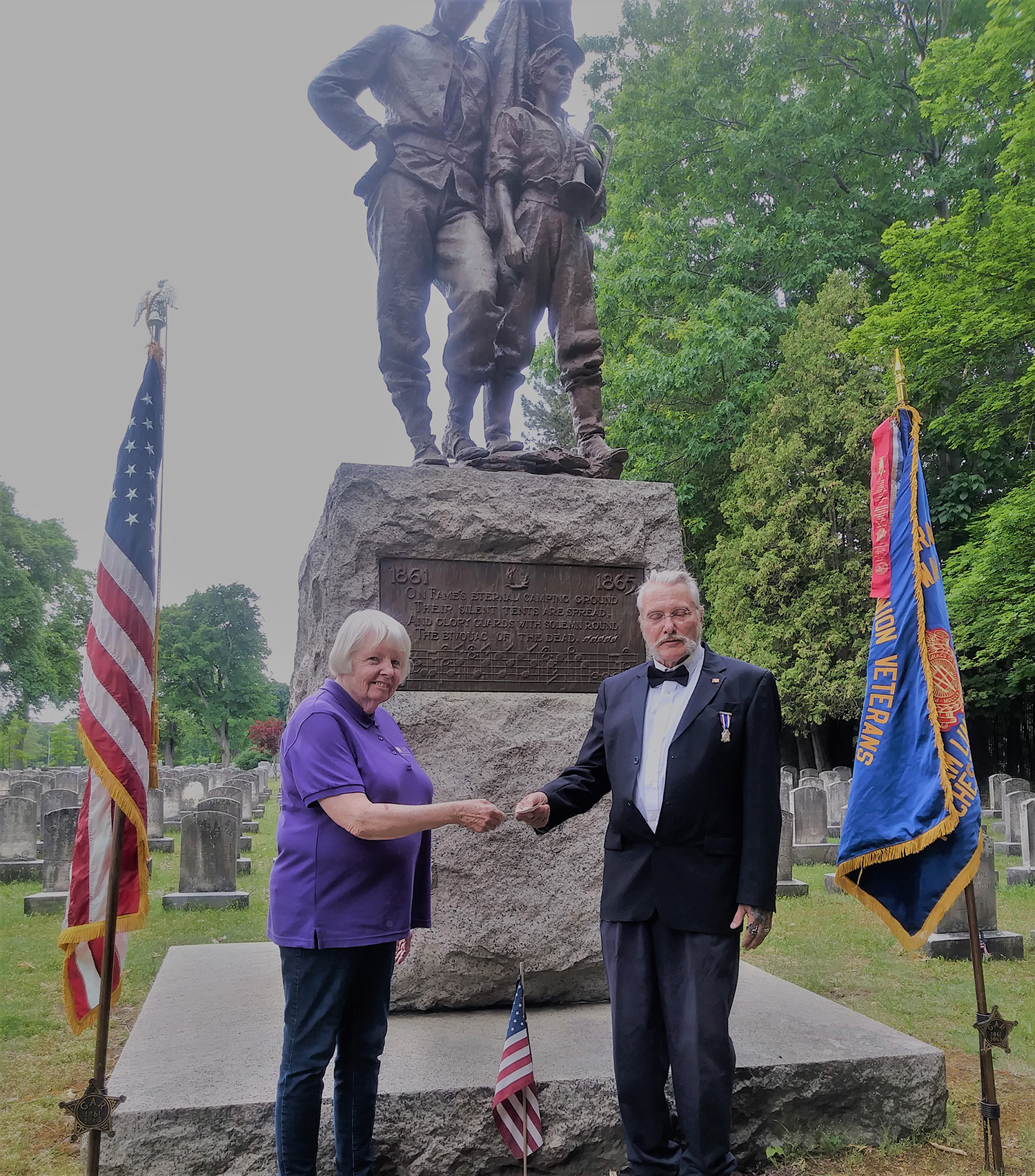
The buildings contained within this space provide a visual evolution of the farm property from the early nineteenth century through the present and how the associated buildings reflect the historic character of the farm. Also, located on the property is a smoke house, milk house, manure shed, lean-to, silos, and burial ground (1811-1858). Currently containing 16 burials, the grounds are an early settlement era burial ground that originally had more burials, but some were reinterred in the Mendon Cemetery when it opened in 1867, including that of Salmon Miller. The remaining burial spots are arranged in two rows and most have rectangular slab markers with simple inscriptions. One marker is near the edge of the grounds. The Barbens take care of the area and replaced two American Revolutionary headstones (John Moore and Henry Courter) the with help of the Veteran’s Administration.
These were dedicated August 26, 2015.
It is important and significant to note it was Paul Heaney who organized the event and Bill Farmer; Project Manager at Catenary Construction Corp. who made and put in precast footers to hold up the two headstones that Henry Courter and John Moore now sit on.
Henry Courter and John Moore are among the early settlers of the Phelps and Gorham Purchase and among the pioneers of Mendon, New York. Military Service Records, Pension Applications, Local Tax Payment, Dutch Reformed Church Records, and Land Bounty, and the Official Register of the Officers and Men of NJ, in the Revolutionary War, provide evidence of the patriotic service and residence during the Revolutionary War. Henry Courter and John Moore are recognized Patriots by the Sons of the American Revolution, the Town of Mendon Historian, the Monroe County and Ontario County Historians. Henry Courter and John Moore are approved Patriot Ancestors of the Daughters of the American Revolution.
In the year 2019, an Eagle Project was completed by Max Murry from Penfield who with friends and family cleaned up the Miller – Barben Cemetery, putting up a flag pole and wooden bench for our community to use when they visit the area. Due to Covid, no celebration was held to praise Max Murry for all his hard work. But in this article, Cindy Barben would like to acknowledge him.
As the area continues to be developed with high-end homes, the Barbens hope to preserve these historic barns and the residence. The Barbens hope to continue to preserve the past for the future generations and maintain an active farm for generations to come.
“Nowadays,” Cindy said, “you may see our neighbors Charley Hastings and John Wells helping Dan Barben on the farm, plowing, planting soybeans or field corn and harvesting the crops. These two people, who have deep roots in our farm community, deserve to be recognized for their hard work.”